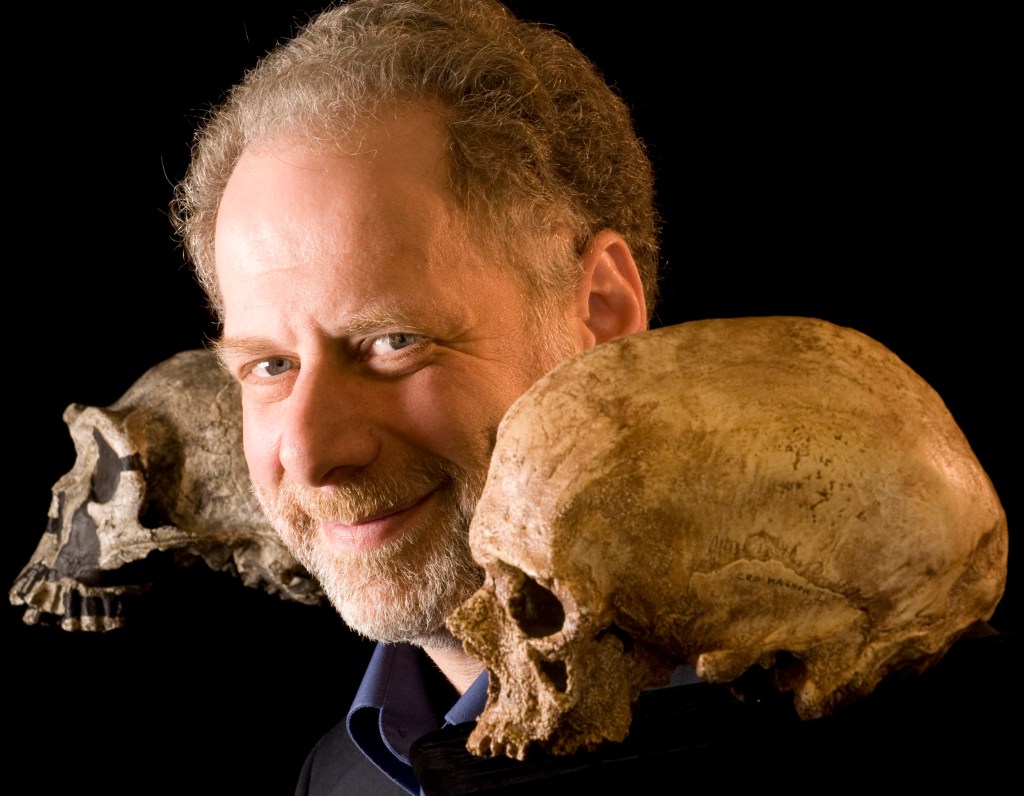
Chris Webster in the field, courtesy of Mr. Webster
Summary
Meet Chris Webster, a CRM archaeologist, anthropology podcast mogul, and all-around hustler. He joins the show to give a different perspective on making a career out of anthropology and what it’s like to work in commercial settings as a cultural resource management archaeologist. Webster also discusses what it’s like working with biological anthropologists and tribal monitors.
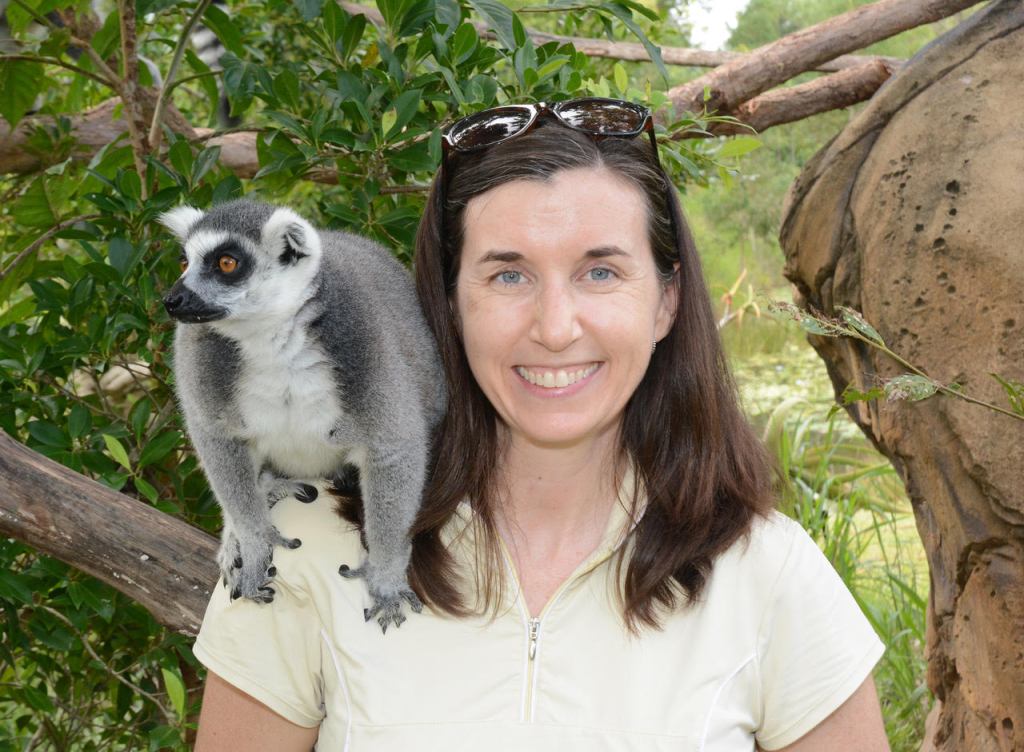
Dr. Tanya Smith with a lemur, courtesy of Dr. Smith
Summary
Dr. Tanya Smith of Griffith University talks about teeth — everything from individual development to using teeth to understand past environments and lifestyles. She also talks about some of the cultural practices surrounding teeth.
Smith, T.M.,* Austin, C.*, Green, D.R.* Joannes-Boyau, R.* Bailey, S., Dumitriu, D., Fallon, S., Grün, R., James, H.F., Moncel, M-H., Williams, I.S., Wood, R., Arora, M. (2018) Wintertime stress, nursing, and lead exposure in Neanderthal children. Sci. Adv. 4: eaau9483. * These authors contributed equally to this work.
Dr. Daniel Lieberman of Harvard talks about considering human evolution through adaptations to run. He also explains mismatch diseases and the types of preventative care we can take to keep ourselves healthy. We also chat about diversity and the importance of including your study population in your work.
Dr. David Raichlen of USC talks about using evolutionary biology to understand modern health consequences. For example, can aerobic exercise paired with mental stimulation result in the formation of neurons? If so, why? And how can we apply that information to helping modern humans live healthier lives?
Raichlen, David & Pontzer, Herman & Zderic, Theodore & Harris, Jacob & Mabulla, Audax ZP & Hamilton, Marc & Wood, Brian. (2020). Sitting, squatting, and the evolutionary biology of human inactivity. Proceedings of the National Academy of Sciences. 117. 201911868. 10.1073/pnas.1911868117.
Mindfully select guests to ensure a diversity of voices are heard on the podcast
Ask each guest questions about the following topics (depending on their areas of expertise):
The current state of diversity and inclusion in academia as a whole and biological anthropology in particular. How has it changed? How far do we have to go? What can individuals do to help?
Biological anthropology’s historic role in defining race and propagating racism. Biological anthropology’s current efforts to push back on racism.
Biological anthropology’s relationship with descendent communities and study populations.
Dr. John Verano carefully excavating human remains from an archaeological dig. Photo courtesy of Dr. Verano.
Summary
Dr. John Verano of Tulane University wades into forensic anthropology and bioarchaeology. He discusses some of the realities of working with the recently deceased before switching gears to talk about a giant sacrifice site that he’s been working on in Peru. Plus, find out what mummies smell like.
Dr. Becker with Illimani in the background. Courtesy of Dr. Becker.
Summary
Dr. Sara Becker of UC – Riverside studies the Tiwanaku culture of Lake Titicaca. She specializes in understanding hierarchy and labor patterns via physical activity markers on the bone. She combines modern ethnographic methods with archaeology and biological anthropology to understand ancient cultures.
What she’s reading for fun:Eternity Road by Jack McDevitt
Extra educational photos
Frost’s Mechanostat (Utah Paradigm)
Image from Wikipedia.
The above figure illustrates how bone responds to stress. Below a certain threshold of strain, humans will lose bone. In the adapted state, bone mass will remain constant. Once sufficient loads are placed on bone, cells will respond by building bone. If the loads exceed the mechanical limits of the bone, fracture will occur.
Arm wrestler Matthias Schlitte. (Image from Croatia Week. Used solely for educational purposes.)Arm wrestler Jeff Dabe. (Image from the Huffington Post. Used solely for educational purposes.)
Dr. Bill Billeck is the program manager for the National Museum of Natural History repatriation office at the Smithsonian. Dr. Billeck explains how repatriation works, what it’s like working with tribes, and shares some stories.
Billeck, Bill & Swift, Jacquetta & Beaver, John & Ferguson, Tj. (2010). Repatriation at the Smithsonian Institution. Anthropology News. 51. 25-25. 10.1111/j.1556-3502.2010.51325.x.
Baby capuchin riding on mother’s back. Photo courtesy of Dr. Jack.
Summary
Dr. Katharine Jack of Tulane University talks about non-human primates, reproductive strategies, the importance of collaborative science, and what to do if you run into a capuchin in the wild.
Dr. de la Cova working at the Smithsonian. Courtesy of her personal collection.
Summary
Dr. Carlina de la Cova of the University of South Carolina discusses forensic anthropology, historical bioarchaeology focusing on marginalized groups, and the overlap between the two.